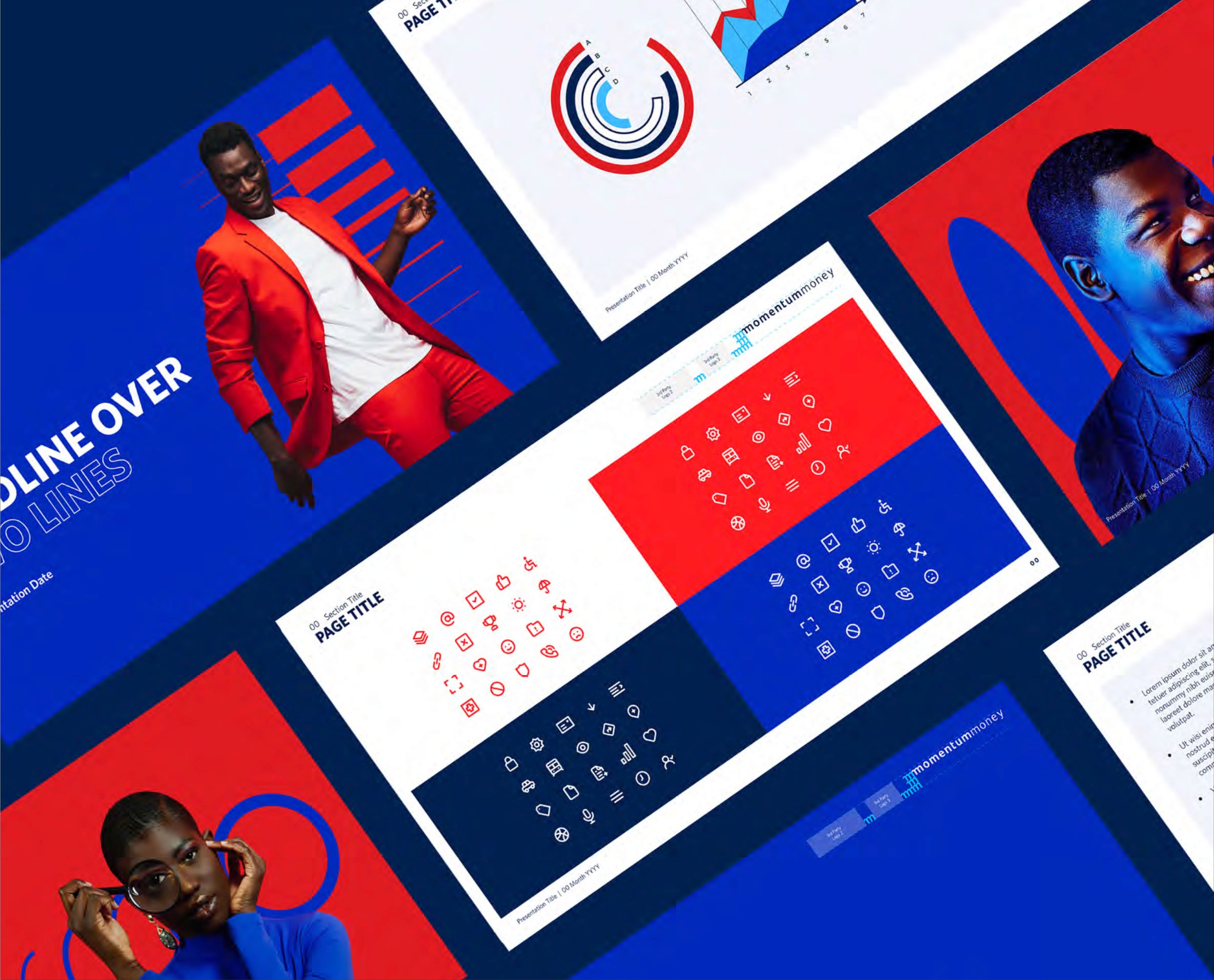
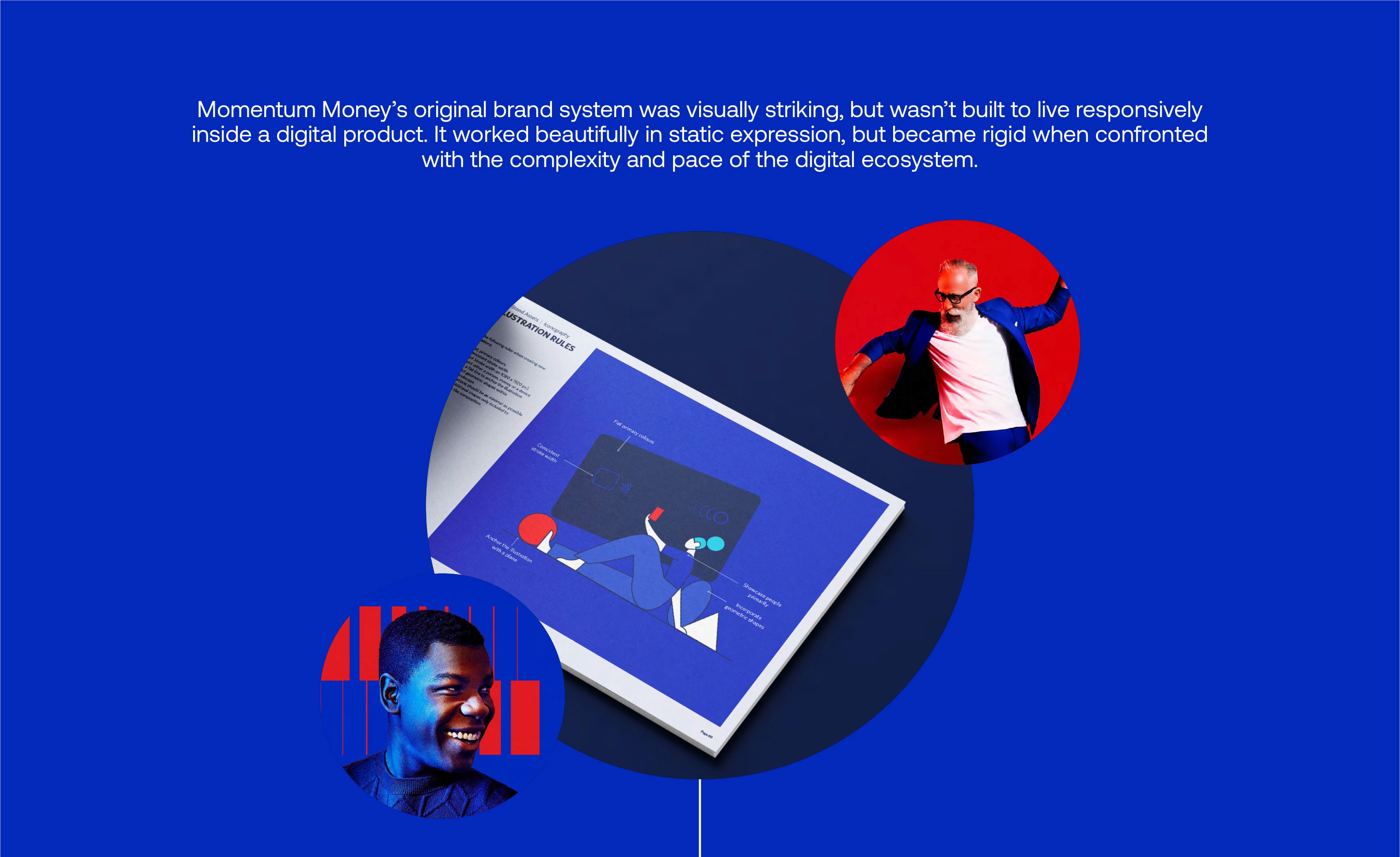
Like many internal teams operating at scale, the Momentum UX function had gradually defaulted to familiar, off-the-shelf component patterns. While efficient in the short term, this eroded brand distinctiveness and reduced the experience to a set of generic interactions, where business objectives were met but the human experience became secondary.
We took a human-centred design approach, reframing the experience layer as a primary expression of the brand. Every moment and micro-interaction was treated as an opportunity to help users feel capable, confident, and in control. Complexity wasn’t removed, but made intuitive through progressive disclosure and subtle allusions to real-world physics, allowing users to understand where things go, how they move, and how to find them again without ever feeling instructed. This thinking was operationalised through an atomic component system that translated Momentum’s brand world into a living, adaptive design language. Rather than enforcing rigid rules, the system encouraged thoughtful growth, allowing individual elements to evolve while maintaining coherence across the ecosystem.
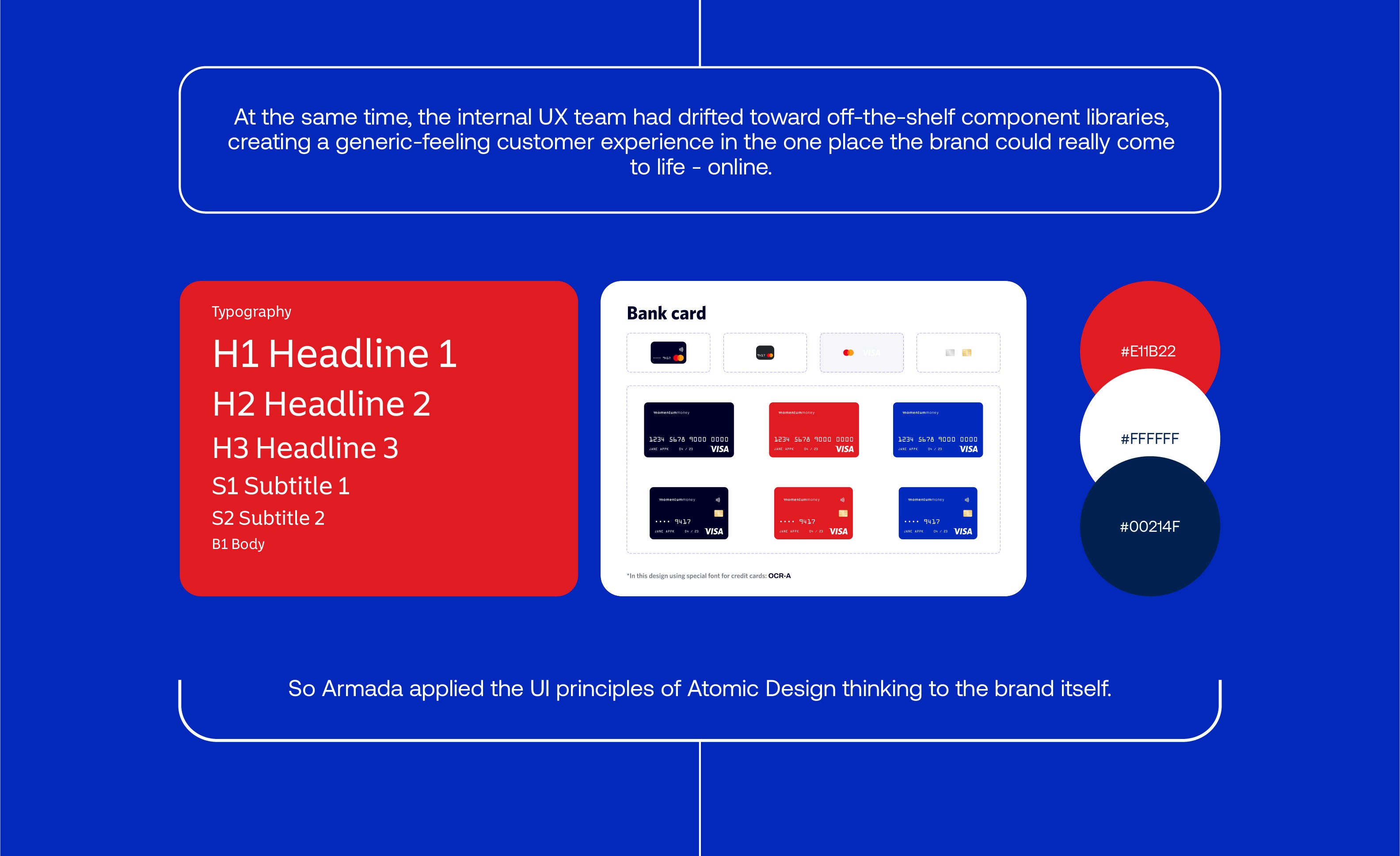
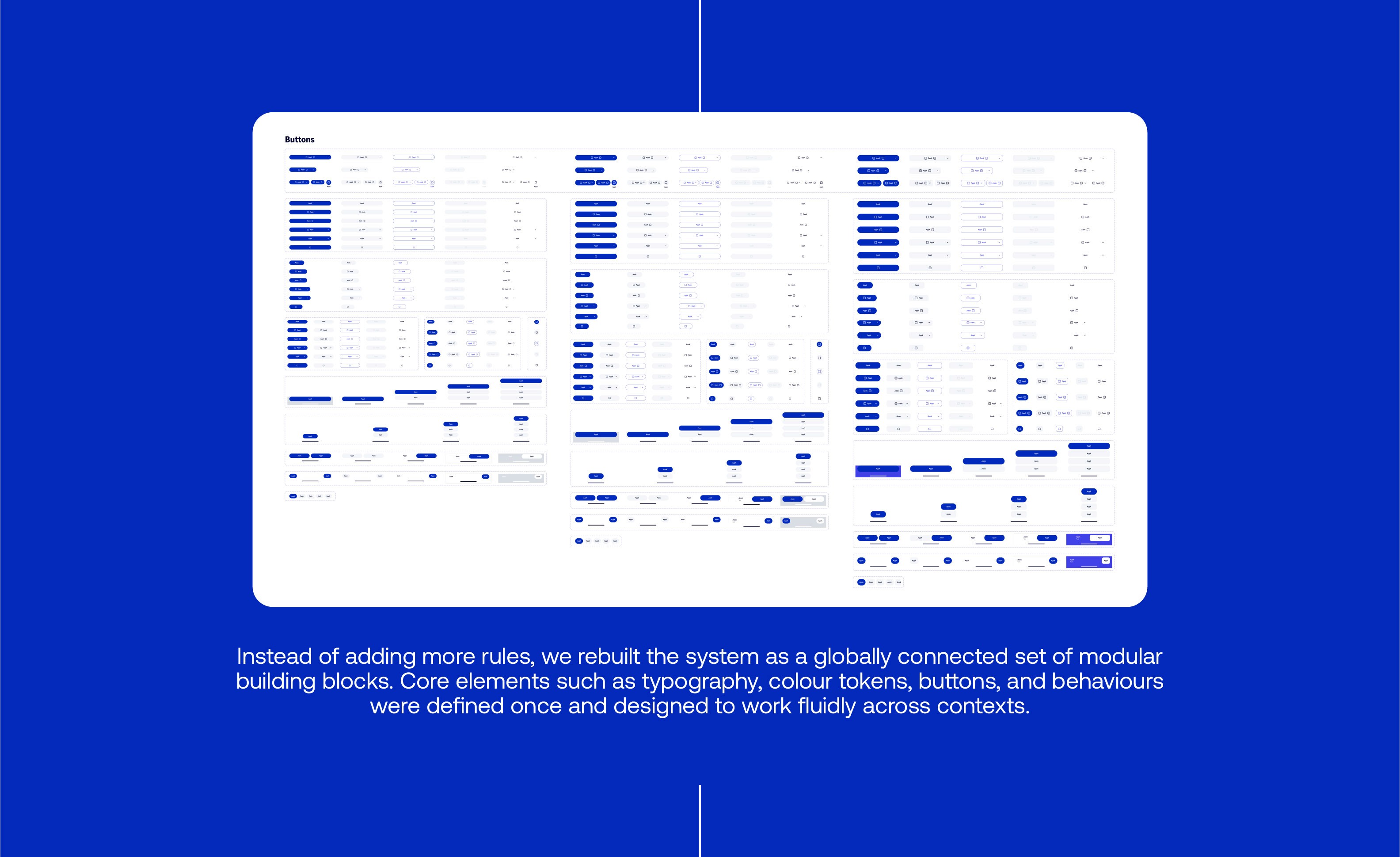
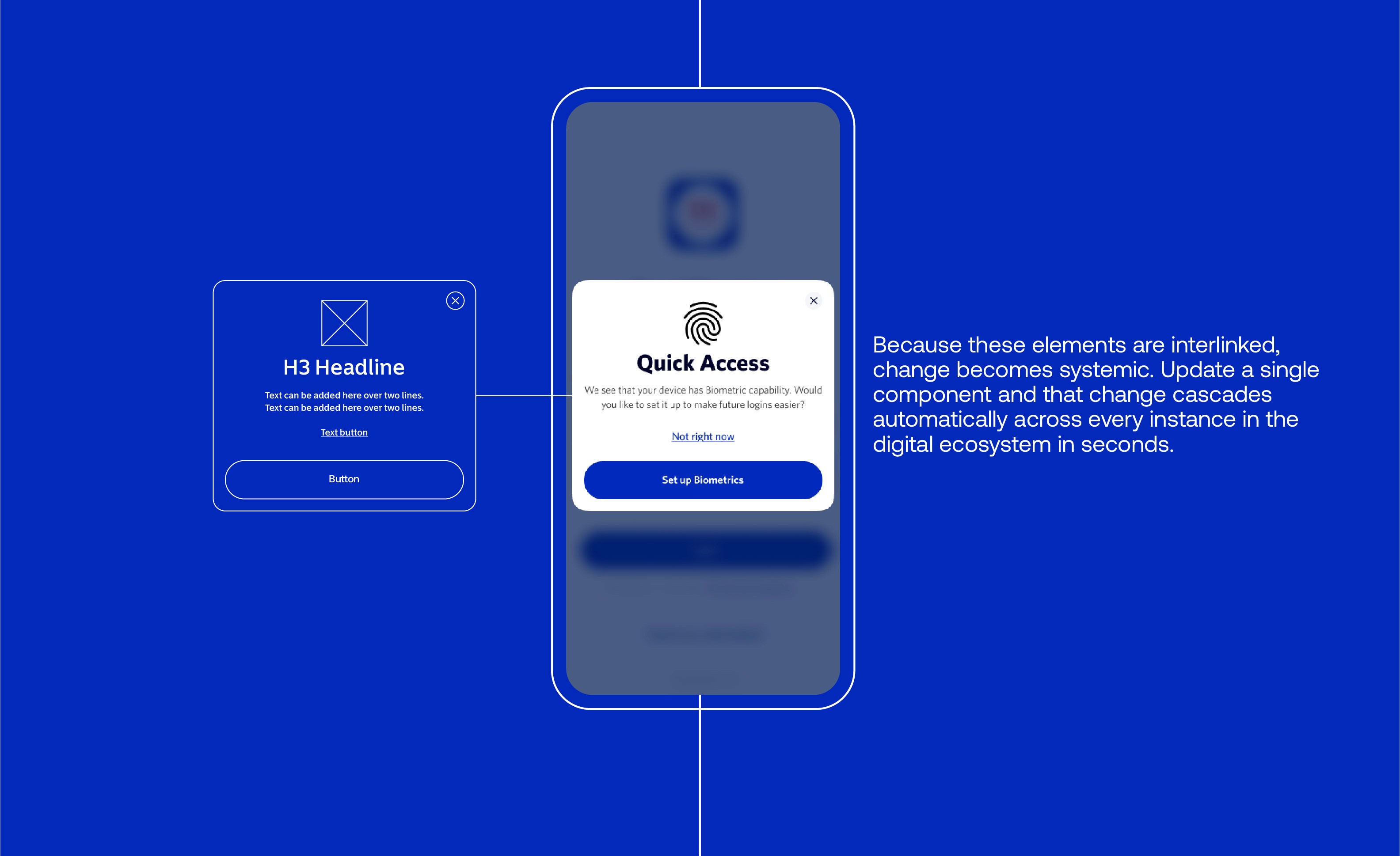
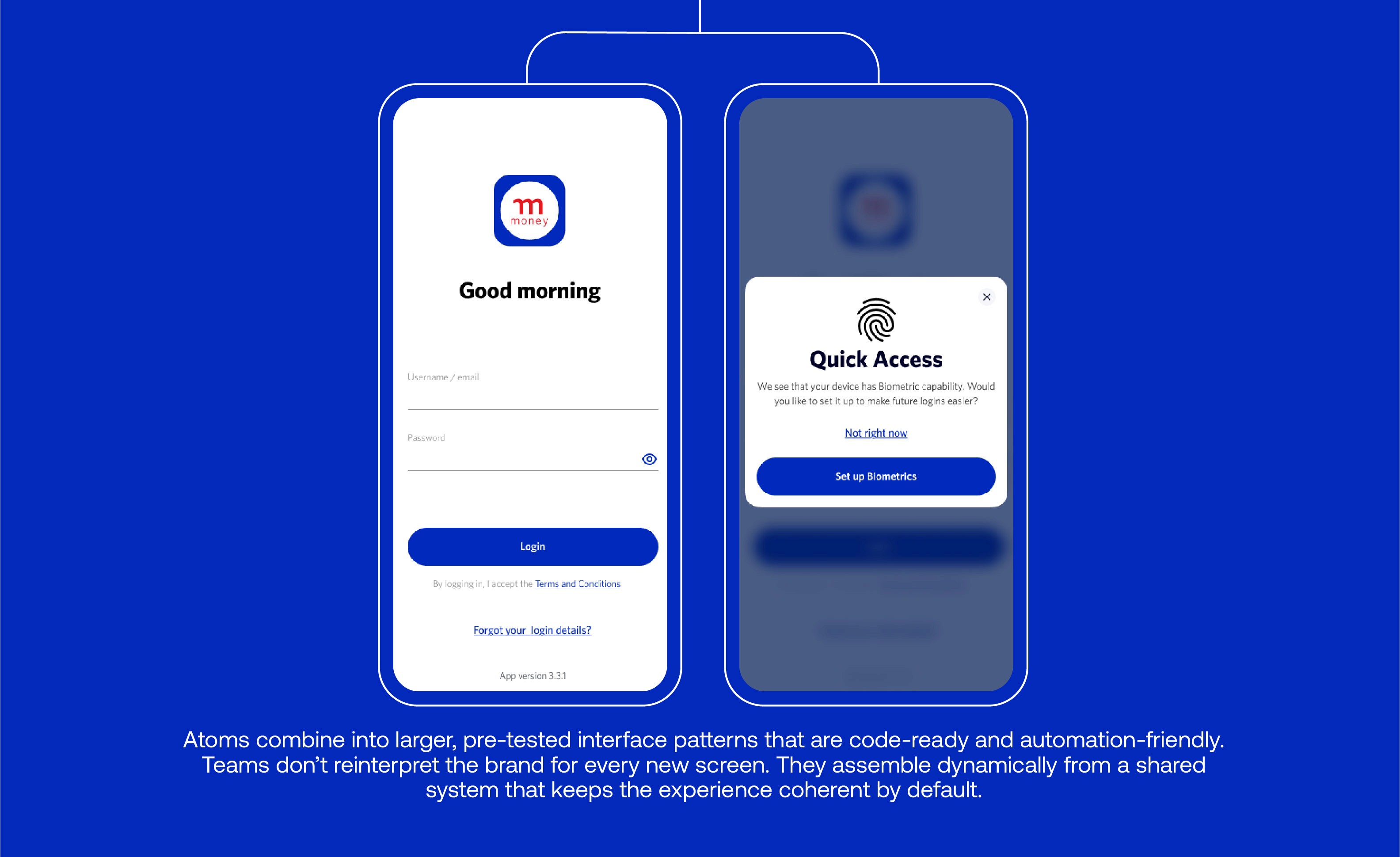
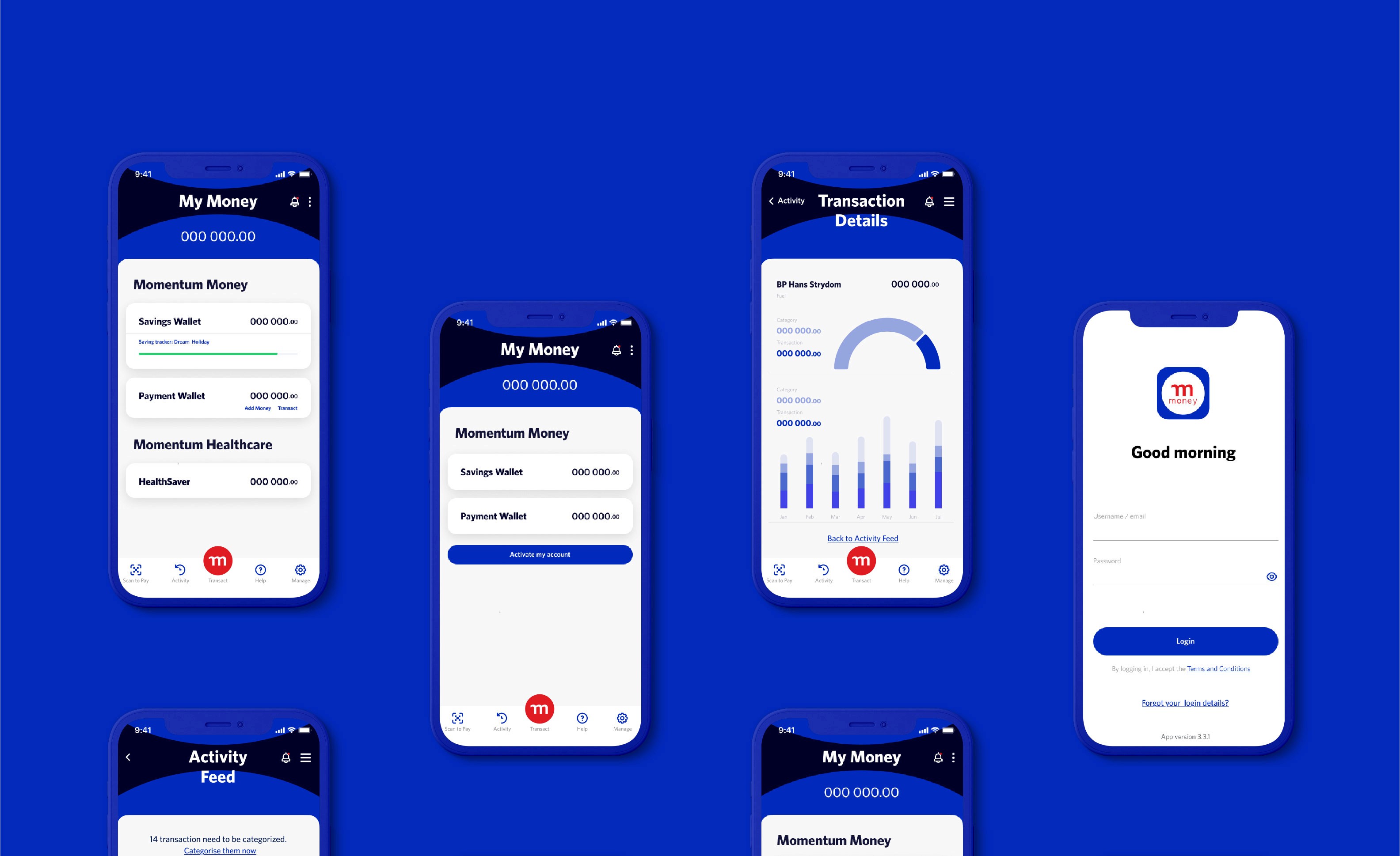
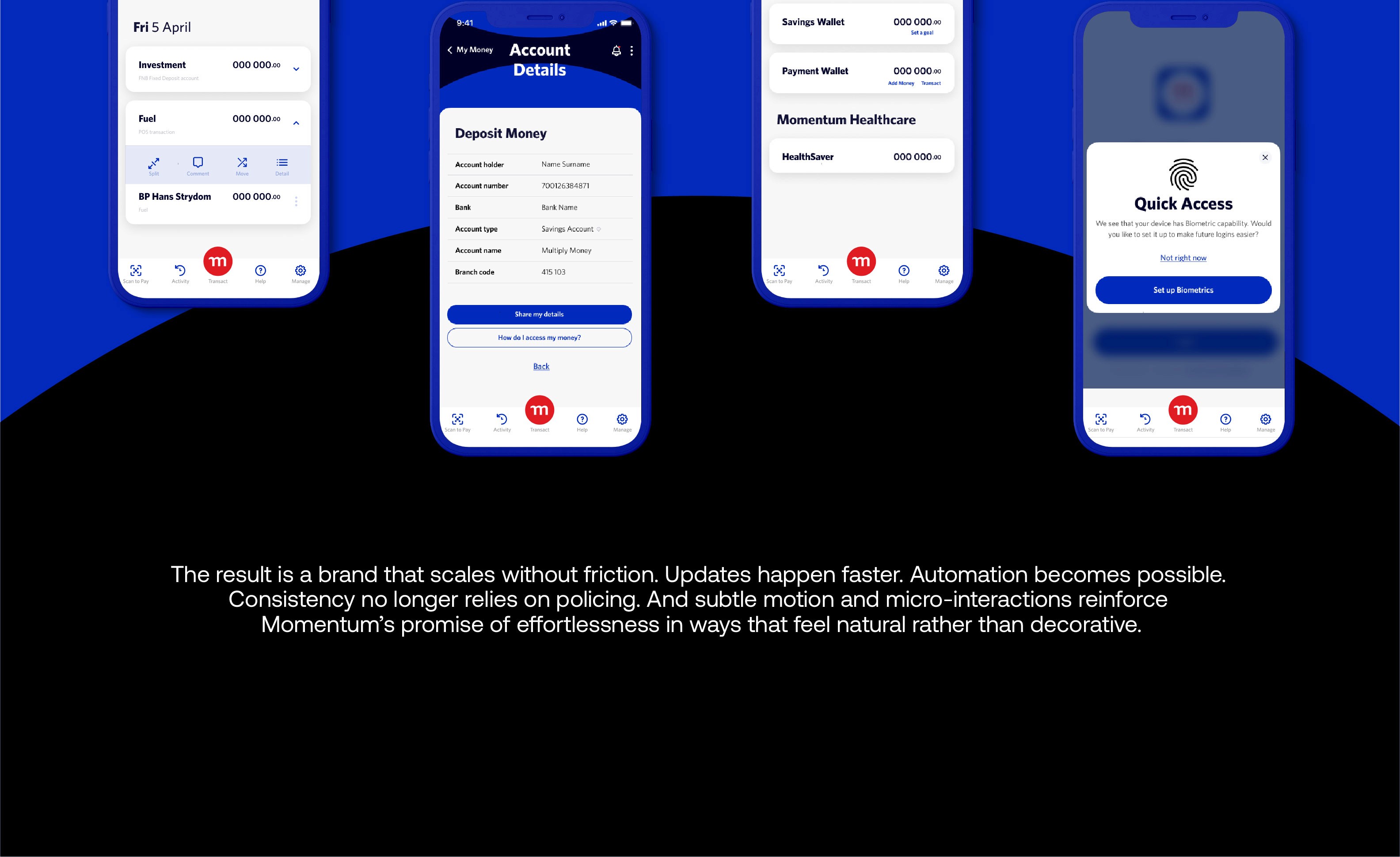

The work recentred cross-disciplinary internal and external teams around the humans the brand exists to serve, creating a shared language between brand, UX, design, and development.
Instead of policing consistency, the system enabled it, making it easier to build experiences that felt both on-brand and genuinely useful. Momentum Money now has an experience framework that is resilient rather than brittle. One that encourages iteration, accommodates growth, and becomes stronger through change rather than threatened by it. Most importantly, it repositions brand not as colour-matched collateral applied at the end, but as something experienced moment by moment, where strategy, design, and behaviour meet.
Next projects.
(2021-2026©)